


we are
An AI-based agricultural and marine supply
chain forecasting and management company
ST Food leverages marine environment data as well as production and distribution data to predict
seafood supply and demand and manage supply stability.

our history
The growth journey of ST Food
built through technology
ST Food has expanded its business around data and technology to solve structural problems in seafood distribution.
Each decision and challenge has led to today’s supply chain technologies.
2025.05
2025.05
05
Acquisition of the MatTongHae brand
08
Establishment of ST Food Co., Ltd.
2025.07
2025.07
05
Consultation for promotion as a Konkuk University Glocal research-based company
2025.08
2025.08
01
Completion of angel investment funding
07
Technology scouting (intermediary institution)
2025.09
2025.09
01
Technology transfer agreement
09
Acquisition of venture business certification
Acquisition of the Gustongue brand
2025.11
2025.11
05
Registration as a research-based company
(No. 1236)
2025.12
2025.12
01
Selected for the 2025 Chungbuk Cheongju Innovation District Technology Commercialization Demonstration Project
Selected for the 2025 Chungbuk Tech-Up Startup Promotion Program
2026.01
2026.01
01
Selected for the 2025 Chungbuk Cheongju Innovation District Integrated Corporate Growth Support Program
seatrace
Seafood data-based market
linkage platform “SeaTrace”
We provide an intelligent seafood supply chain management service by integrating sales data,
traceability information, and demand forecast data into a single platform
connecting producers, distributors, and consumers.
Construction of a seafood sales data lake
Monitoring sea surface condition changes (temperature, wave height, salinity, red tide, etc.)
Monitoring monthly changes in fishery production
Monitoring import and export records
Monitoring monthly seafood sales price trends
Database
Data optimization (time series + GNN
/ deep learning / MLQps)
Target feature definition
and anomaly detection
Supply and demand forecasting
Supply instability grading
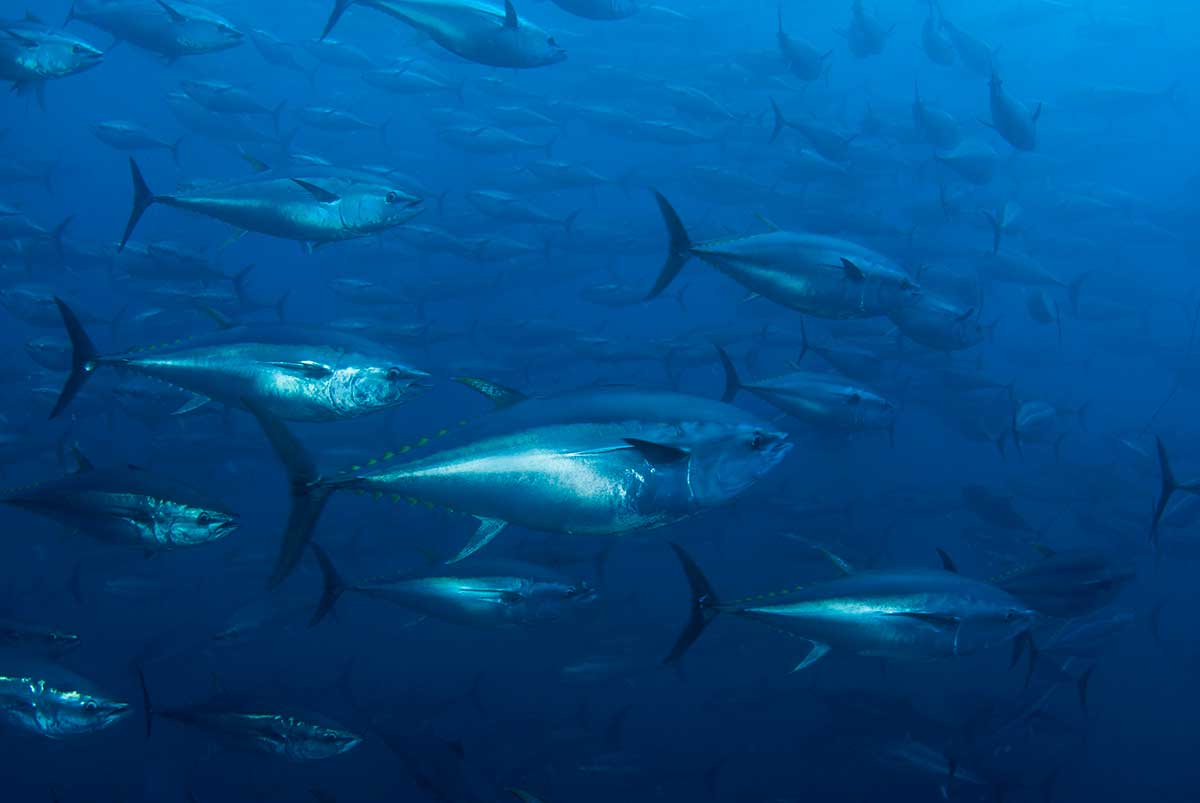
Prediction of supply and demand fluctuations
and design of optimal supply structures through
AI analysis
Development of AI-based supply chain forecasting and demand–supply matching algorithms

Content development based on seafood traceability systems

Big data construction and analysis
based on proprietary PB products
Solution Overview
Data-driven demand–supply
forecasting
research framework
By integrating marine environment, production, distribution, and consumption data
and applying AI analysis,
we systematically analyze uncertainties in agricultural and seafood supply chains.
Marine
environment
Big data center and
demand–supply estimation AI
Consumer transaction
environment
AI algorithm
Derivation of results based on AI analysis
Through AI-based analysis results, demand–supply forecasts and fluctuation trends can be intuitively identified.
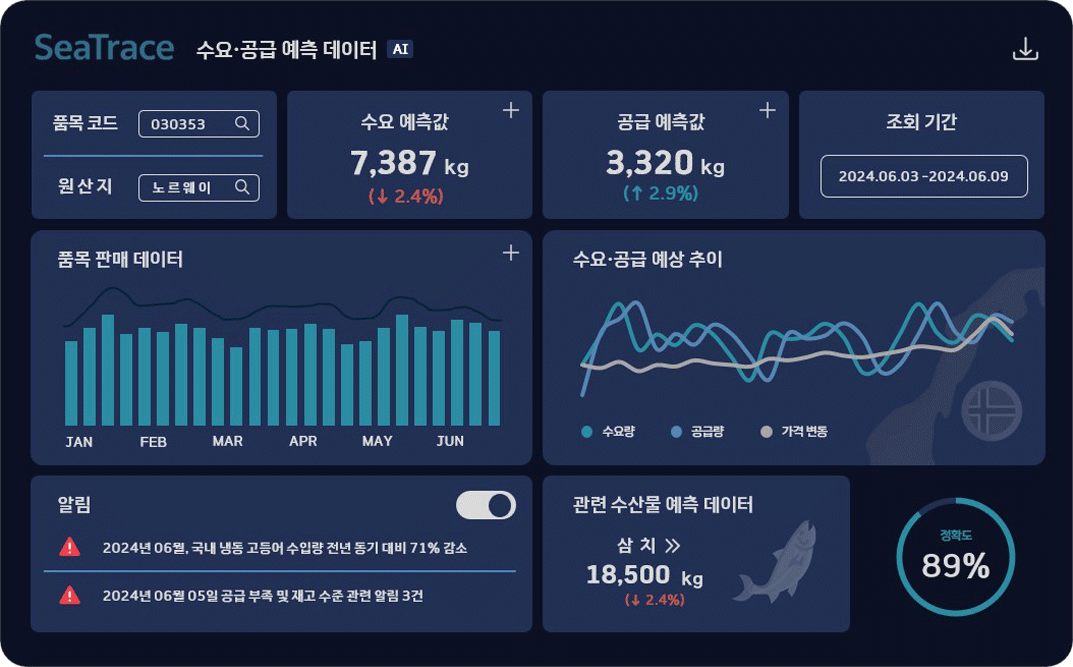
▲ Demand–supply forecasting AI “SeaTrace” program
our brand
An integrated food technology brand connecting
the entire food distribution ecosystem
Brands with different roles collaborate to create a more stable food distribution environment.

Gustongue
A group purchasing
platform
connecting
consumers and suppliers
MatTongHae
Seafood and processed
food platform

SeaTrace
Preparing for launch (beta opening scheduled
for October 2026)
Review
Real-world experiences from on-site
operations and technology utilization
This section contains experiences and opinions from diverse perspectives
gained
through on-site operations and the use of technology.
a***** / Demand management manager
k**** / Supply and operations manager
l***** / Data analysis manager